ReadSmart ReadSmart
Download the app

Read. Tap. Remember.

An all-in-one English learning app.

A dictionary that saves the words you look up, A1–C2 lessons aligned with international standards, TOEIC, IELTS, Grammar, News, and automatic review — learn in carefully crafted contexts, see words again at the right time, retain them longer, and use English with confidence.

No account required Backed by learning science 7-day Premium trial
ReadSmart — Read. Tap. Remember.

Trusted by leading universities

HCMUT, UEF, STU and many other universities are rolling out the ReadSmart scholarship program for their students.

HCMUT logo
HCMUT Ho Chi Minh City University of Technology

The university endorsed ReadSmart as beneficial for learners and introduced it to students across the entire campus.

Official article on the HCMUT website →
UEF logo
UEF Ho Chi Minh City University of Economics and Finance

ReadSmart hosted the "Read Smart – Speak Fast" workshop at UEF, sharing reading comprehension methods, vocabulary learning, spaced review, and effective English-learning techniques for students.

Official article on the UEF website →
STU logo
STU Saigon Technology University

The university officially rolled out the ReadSmart scholarship program to its students through the Student Affairs Office's communication channels.

Official post on the STU fanpage →

Start with the free dictionary

No sign-up. No subscription required. Just tap — with automatic review right before you're likely to forget.

2 ways to use it

While reading

Tap any word in a reading → see full details → one tap to 'Save to Library'

For direct lookup

Open the app → type the word you want to look up → see full details → one tap to 'Save to Library'

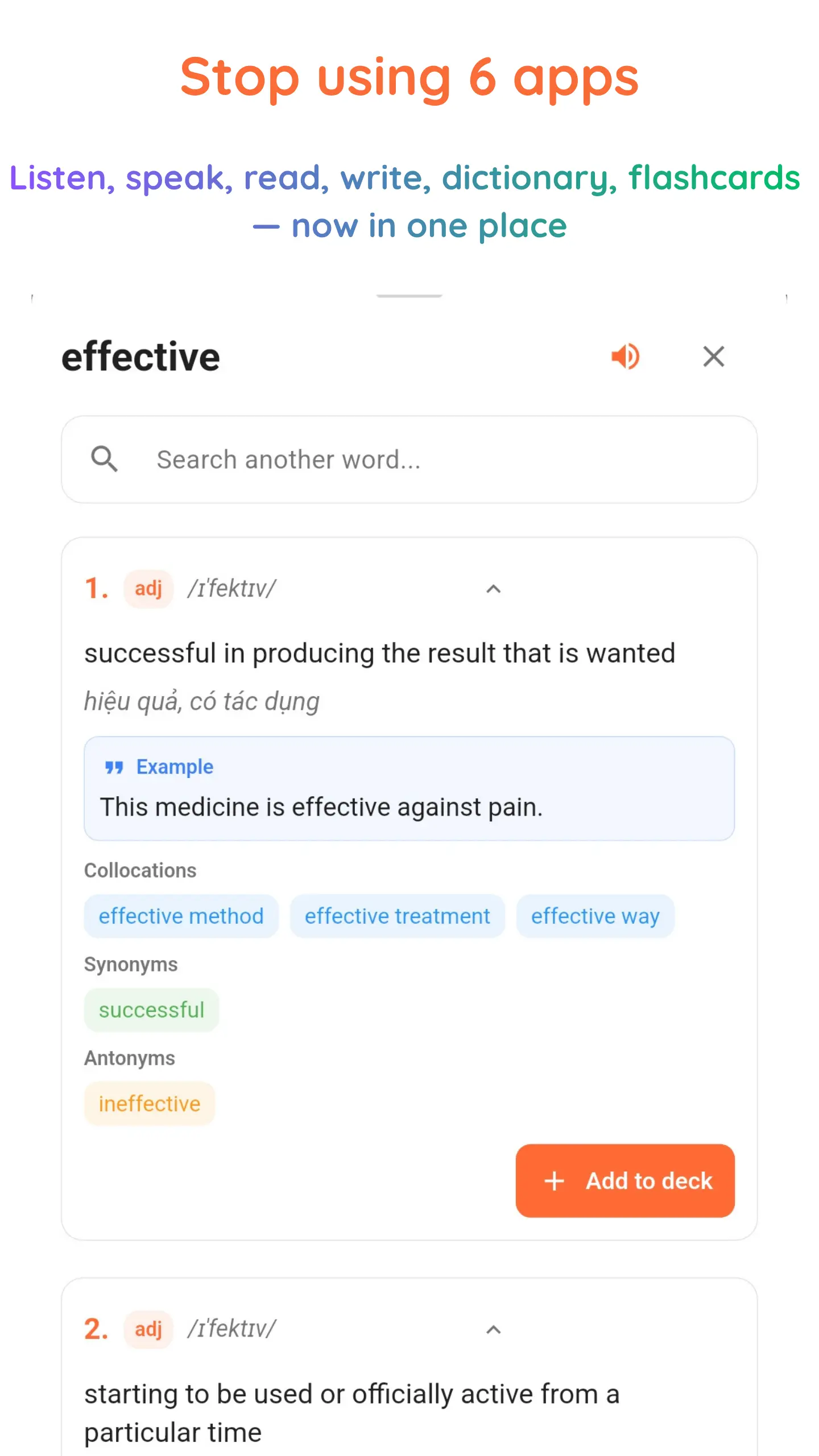
With every lookup, you get

  • Clear meaning in context
  • Pronunciation
  • International-standard IPA transcription
  • Example sentences for each meaning
  • Common collocations
  • Synonyms and antonyms
  • Translation into your native language

🎯 The biggest difference

A regular dictionary only helps you UNDERSTAND a word at the moment you look it up. ReadSmart goes further by helping that word COME BACK to you — through your word library, flashcards, quizzes, games, highlights in readings, and a personalized review schedule. One tap on 'Save to Library' is enough.

How ReadSmart works

A natural learning flow — 4 simple steps.

1

Read

Level-appropriate A1–C2 readings with sentence-synced audio. Read and listen at the same time. Practice shadowing as you read.

2

Look up

Tap an unfamiliar word → see its meaning in context, pronunciation, examples, and collocations.

3

Save

Save the word to your personal library in one tap — along with the original sentence you read.

4

Review

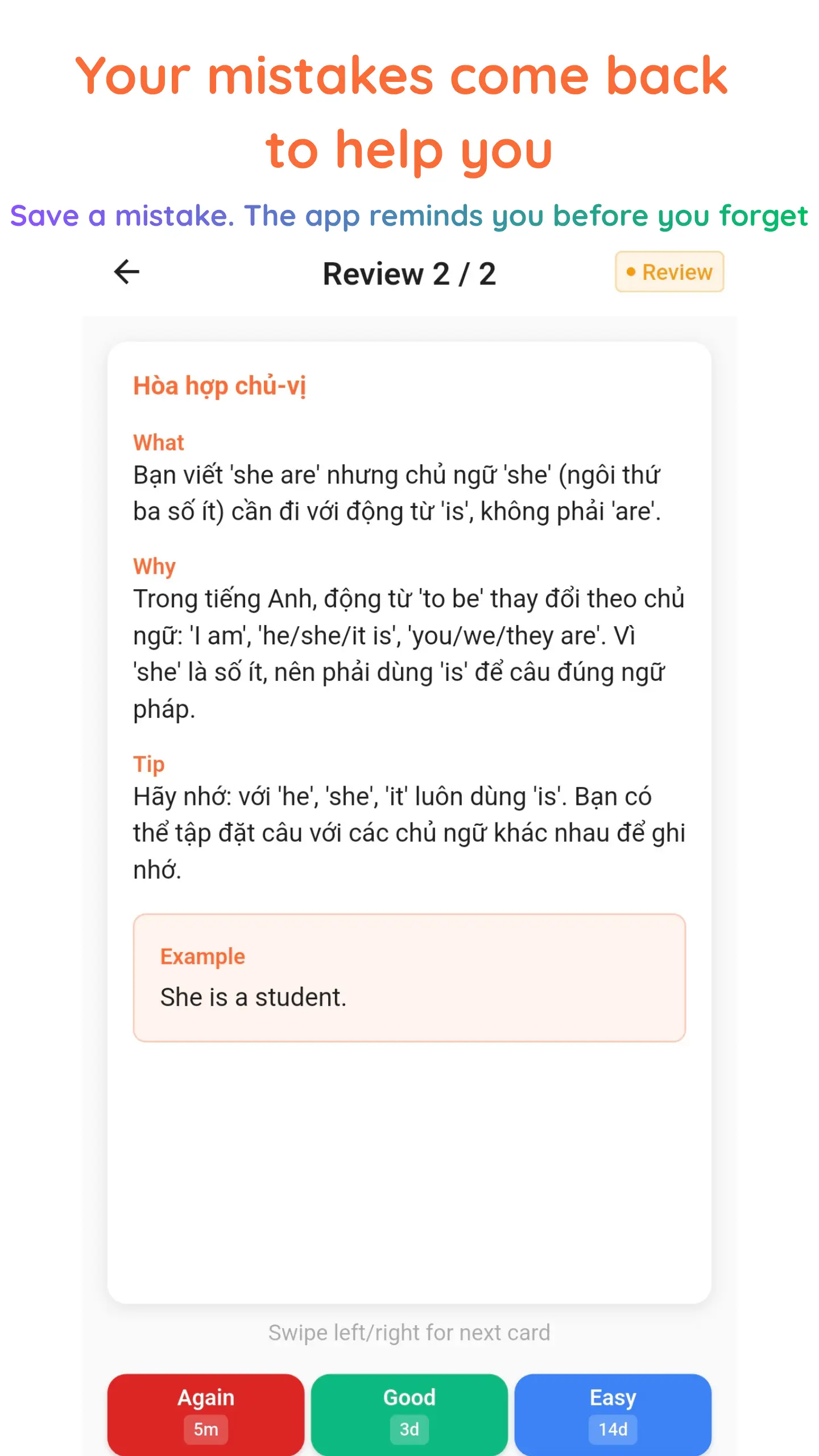
The app reminds you to review right before you're likely to forget, using flashcards, quizzes, highlighted words in new readings, and vocabulary games.

Repeating this flow helps vocabulary appear again and again in carefully crafted contexts — making it easier to remember than memorizing isolated word lists.

Why ReadSmart?

Because most learning apps solve only one part of the problem. ReadSmart is designed to be more effective by combining reading, word lookup, and contextual review in a science-informed learning flow.

📚

Traditional dictionary apps

Cambridge, Oxford, Tflat

Limitation

You look up a word, then quickly forget it — there's no built-in review tool, so you have to copy words manually into another app. That process is distracting and easy to abandon.

🃏

Flashcard apps

Anki, Quizlet

Limitation

You have to build your own decks. If you use someone else's deck, it isn't personalized to you — shared deck quality varies, words are studied in isolation, and real context is often missing.

📖

Reading apps

LingQ, FluentU

Limitation

Many reading apps use mixed content and are not fully optimized for mobile. Dictionary lookup, word saving, and post-reading review often are not seamless enough. Beginners may also struggle to choose readings at the right level or follow a consistent topic path.

🎮

Gamified learning apps

Duolingo, Cake

Limitation

Fun and habit-forming, often a good fit at the foundation stage. But TOEIC and IELTS learners, or learners who need to read English materials for exams, work, or deeper study, need richer content and carefully crafted context.

✨ ReadSmart is built on learning science while addressing these gaps in one app

  • A dictionary that lets you look up and save words for review
  • Automatic, personalized spaced repetition — no need to build decks manually
  • Properly leveled CEFR A1–C2 + IELTS + TOEIC programs
  • Mobile-optimized readings that help you learn words in context

WHAT MAKES READSMART DIFFERENT

A few minutes a day — enough to get a little smarter

Reading CNN improves your English, but slowly — every article is its own vocabulary world. ReadSmart tells one question across many days, many moods, with the same set of phrases. You understand the world and actually use English to talk about it.

One big question about life each week

Why do people give up? Why do we follow the crowd? A question worth thinking about all week — 7 days of step-by-step answers across psychology, culture, history. Read it and understand yourself and others a little better.

🔁

The same phrase, back in many different stories

CNN: the phrase 'fall into a pattern' today — maybe three months until you see it again. ReadSmart: that phrase comes back on Monday, Wednesday, Friday in three different moods. This is how a phrase shifts from 'I get it' to 'I can say it'.

🌍

Global stories — not just the US and UK

Western media tells the world through a Western lens. ReadSmart has M-Pesa in Kenya, WhatsApp in India, Jakarta traffic, K-pop in South Korea, Vietnamese patriotism. Learn English to understand the whole world — not just one corner.

💡

Learn what school doesn't teach

Network effects, path dependence, cognitive bias, sunk cost — concepts adults use to understand life. Other outlets assume you know. ReadSmart tells stories so you understand from the inside out, not memorize and forget.

📰

Any way you want to read — it's there

Tired? A warm 3-minute story. Sharp today? A crisp explainer. Before bed? A strange fact in 90 seconds. Every kind of article for every mood — and the same key phrases repeat across them, so no matter how you read, the words stick.

A typical week on ReadSmart

Question of the week: Why do people give up?

Mon
Open

Why some quit and some don't

Tue
Go deep

Why failure 'shouts' louder than success

Wed
Light

Why small goals beat big ones

Thu
System

Why a tired brain refuses to try

Fri
Widen

'Try harder' — a very Western story

Sat
Reflect

Self-belief — the quiet engine of effort

Sun
Close

The beauty of trying even when you might fail

Read on Monday and you'll want to come back Tuesday — not from fear of losing a streak, but because you want to know the next answer.

Internationally aligned learning programs — A1 to C2

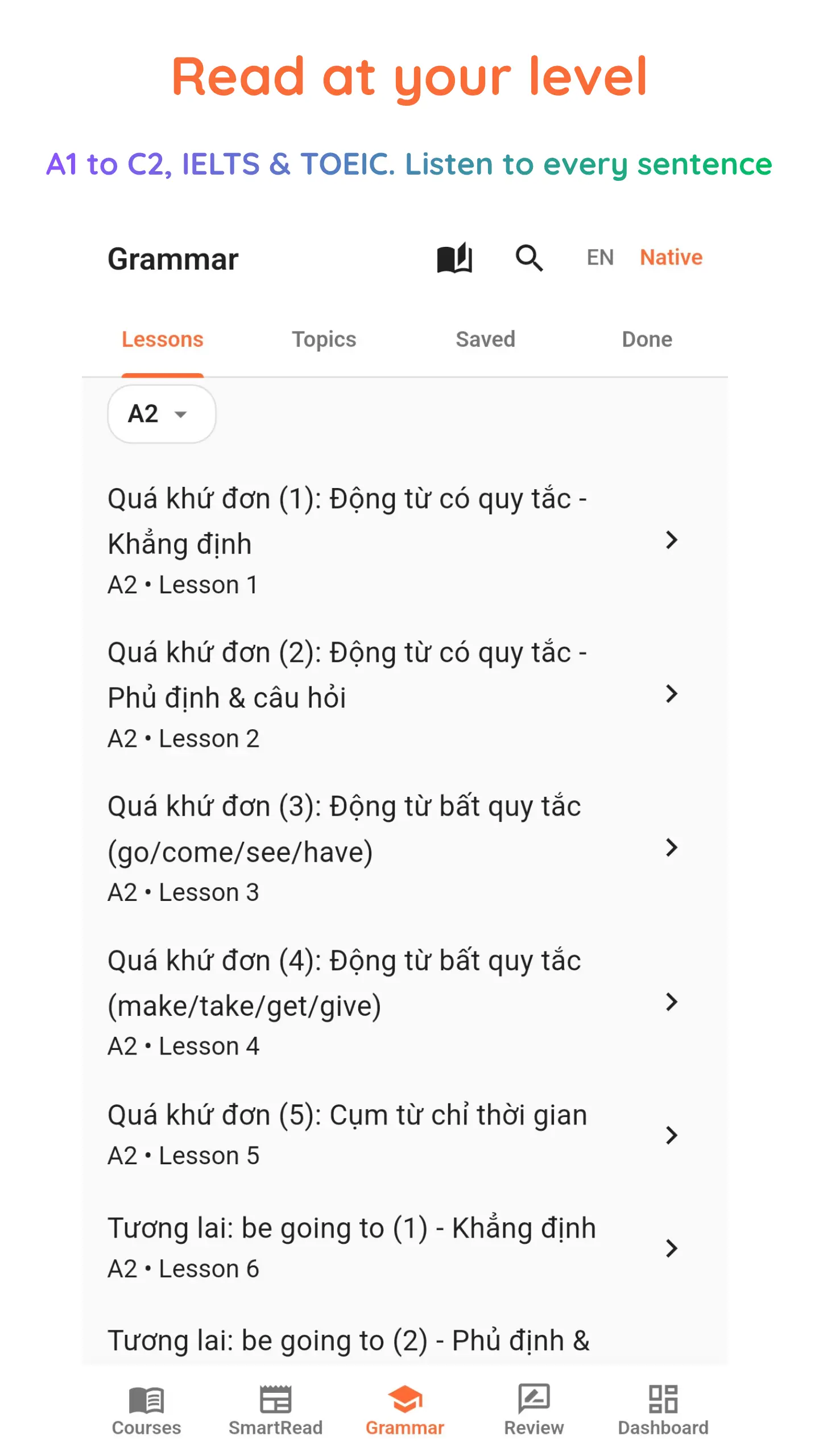
5 programs. Each reading is designed to support effective language acquisition. Updated regularly.

📘

General English

A1 → C2

International-standard readings by level — covering social, cultural, academic, and other topics, with advanced depth up to C2 Pragmatics.

📝

Grammar

A1 → C2

From basic grammar (Have/Has, Tenses) to advanced Argumentation, Pragmatics, and Hedging.

🎯

TOEIC

450 → 945 points

Structured by target score. In-depth Part 7 readings, with vocabulary for business, finance, the workplace, operations, and more.

🌐

IELTS

Band 5.0 → 9.0

IELTS Academic Reading passages across topics commonly seen in the IELTS exam.

📰

Daily Smart Read — Sharpen Your Mind

A2 → C2 — 5 minutes a day

Each week, one big question about life — answered over 7 days from 7 angles: psychology, technology, culture, history, the meaning of life, and more. You'll come away understanding the world and people a little better — and your English will be a little better too.

Try real readings from ReadSmart

Experience deeper content, designed for how the brain learns — not artificial textbook-style passages.

A1

Making Friends

Tom is new at school. He comes from a different city, so he does not know anyone here. On his first day, he feels a little nervous. He walks into the classroom and looks around. There are many students, but no one talks to him.

A girl with a big smile walks up to him. "Hi! My name is Lily," she says. Tom says, "Hello! I'm Tom. Nice to meet you." Lily says, "Nice to meet you too! Come and sit with me." Tom feels better already.

Vocabulary Collocation
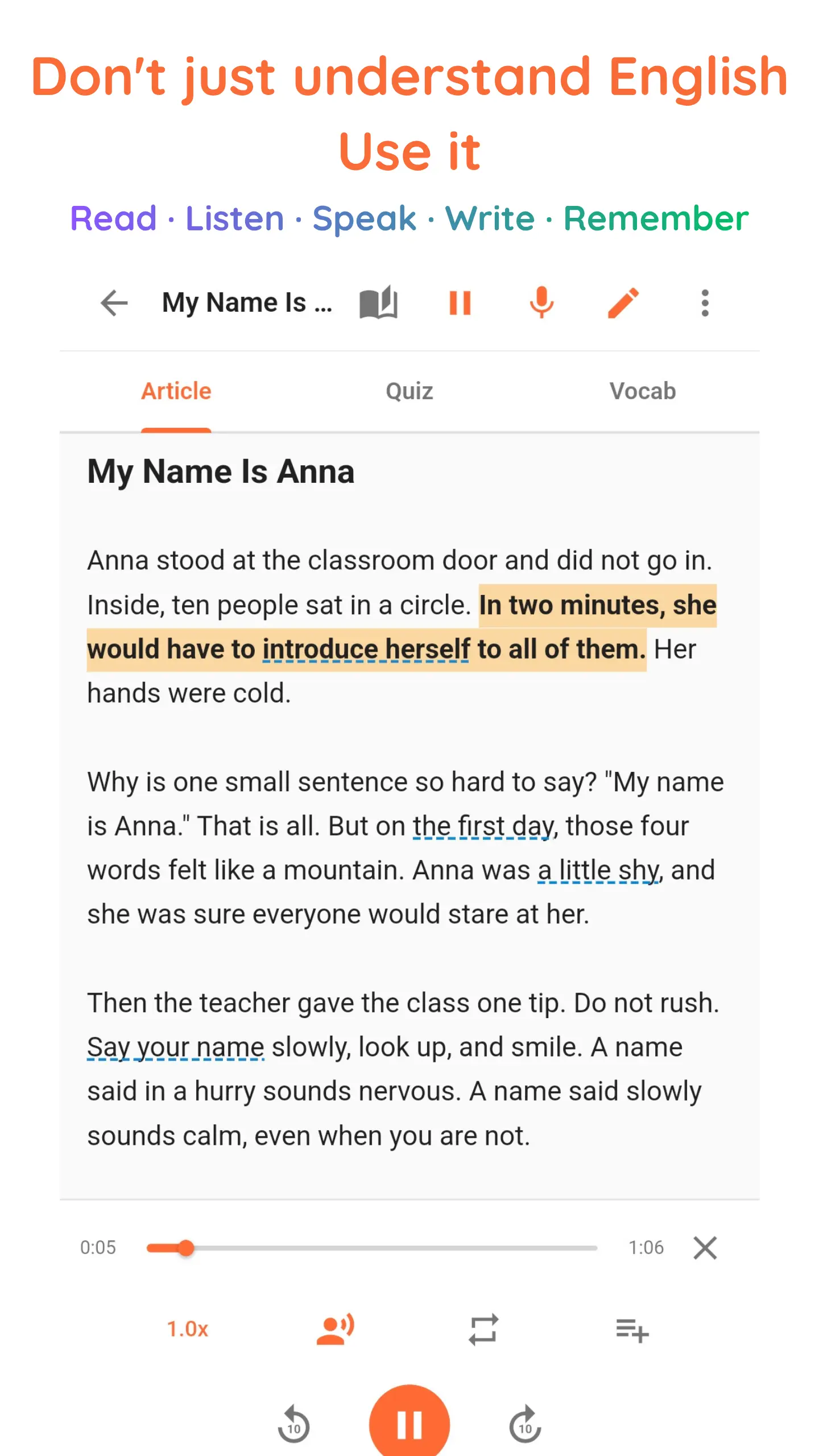
This is only sample text. In the app, you can tap any word to see its full definition. Collocations are underlined, and words you're learning are highlighted. A1–A2 lessons include bilingual support.

The science that guides our app design

ReadSmart is designed around 11 research-supported learning methods from second language acquisition (SLA), cognitive psychology, and widely adopted educational technology.

💡 Tap the arrow to see details and how ReadSmart applies each method

Appropriate input

Comprehensible Input
Krashen

📚 Scientific basis

Learners are more likely to acquire language successfully when they are exposed to comprehensible input that includes some language elements slightly above their current level — commonly known as the "i+1" concept. The theory was proposed by Prof. Stephen Krashen (University of Southern California) in 1982 and has been widely studied in SLA.

⚡ How ReadSmart applies it

ReadSmart's reading system is carefully graded by CEFR level from A1 to C2, helping learners access content that matches their ability. Bilingual A1–A2 readings act as a bridge for beginners.

📖 References

  • Krashen, S. D. (1982). Principles and Practice in Second Language Acquisition. Pergamon Press.
  • Krashen, S. D. (1985). The Input Hypothesis: Issues and Implications. Longman.
Extensive Reading
Day & Bamford, Nation

📚 Scientific basis

A method that encourages reading large amounts of level-appropriate material across varied topics. A strong body of research supports its role in increasing language exposure, developing vocabulary, and improving reading fluency. Learners often need to encounter a word multiple times in different contexts (some studies suggest around 10–12+ encounters) to develop deeper knowledge.

⚡ How ReadSmart applies it

Daily updated news, readings across diverse topics (psychology, technology, finance, health, society, history), a "Save for Later" feature, and a clean interface optimized for long-form reading.

📖 References

  • Day, R. R., & Bamford, J. (1998). Extensive Reading in the Second Language Classroom. Cambridge University Press.
  • Nation, I. S. P. (2009). Teaching ESL/EFL Reading and Writing. Routledge.
  • Webb, S. (2007). The effects of repetition on vocabulary knowledge. Applied Linguistics, 28(1), 46-65.

Initial memory formation

Contextual Learning
van den Broek et al.

📚 Scientific basis

Learning vocabulary in information-rich contexts, with opportunities for retrieval during reading, can support vocabulary learning and retention better than isolated exposure — especially when learners meet the same word again in different sentences and paragraphs. This helps learners understand not only meaning, but also usage nuance and how words combine with others.

⚡ How ReadSmart applies it

Every word you look up or save keeps the original sentence from the reading. When a saved word appears in another reading, the system automatically highlights it — creating repeated exposure across different contexts.

📖 References

  • van den Broek, G. S. E., Wesseling, E., et al. (2022). Vocabulary learning during reading: Benefits of contextual inferences versus retrieval opportunities. Cognitive Science, 46(4), e13135.
  • Zarfsaz, E., & Yeganehpour, P. (2021). The impact of different context levels on vocabulary learning and retention. Shanlax International Journal of Education, 9(4), 24-34.
Collocation Instruction
Li & Lei (2024)

📚 Scientific basis

Collocations are word combinations that commonly occur together in English (for example: make a decision, strong coffee) — an important factor in helping learners use English more naturally, accurately, and appropriately for context. A meta-analysis by Li & Lei (2024) across 64 research projects (N = 3,859 learners) reported an effect size of d = 1.415 (very large). Explicit instruction was found to be more effective than implicit instruction.

⚡ How ReadSmart applies it

Collocations are underlined directly in readings as a form of intentional noticing support in real context. Learners can view explanations and examples instead of studying phrases from isolated lists.

📖 References

  • Li, X., & Lei, L. (2024). Effectiveness of second language collocation instruction: A meta-analysis. International Review of Applied Linguistics in Language Teaching, 62(2), 377-404.
Multimodal Learning
Mayer

📚 Scientific basis

According to Prof. Richard Mayer's Cognitive Theory of Multimedia Learning (UC Santa Barbara), the brain processes information through two main channels: the visual channel and the auditory channel. When text, audio, and images are directly related, synchronized, and designed to avoid cognitive overload, multimodal learning can support deeper understanding and memory.

⚡ How ReadSmart applies it

Learners encounter vocabulary through complementary forms of representation: text in readings, synchronized audio, and images in flashcards. These formats support the brain's two main processing channels.

📖 References

  • Mayer, R. E. (2009). Multimedia Learning (2nd ed.). Cambridge University Press.
Shadowing
Hamada, Mori

📚 Scientific basis

Shadowing is a method in which learners listen and repeat after a native-speaker pronunciation model, sometimes comparing their own voice with the model. It has been widely studied in SLA, especially through the work of Hamada, Tamai, and Mori. It may support improvements in pronunciation, intonation, listening comprehension, and working memory for second-language sounds.

⚡ How ReadSmart applies it

The "Practice pronunciation with a model" feature provides a 3-step flow: (1) Listen to a native-speaker sentence model, (2) Record yourself repeating the model, and (3) Listen back to compare with the model and adjust your pronunciation. The flow is applied to sentences from readings, keeping practice tied to natural context.

📖 References

  • Hamada, Y. (2017). Teaching EFL Learners Shadowing for Listening: Developing Learners' Bottom-up Skills. Routledge.
  • Hamada, Y. (2016). Shadowing: Who benefits and how? Language Teaching Research, 20(1), 35-52.
  • Mori, Y. (2011). Shadowing with oral reading. Language Education & Technology, 48, 1-22.

Reinforcement

Spaced Repetition
Cepeda et al. (2006)

📚 Scientific basis

Spaced learning often helps maintain long-term memory better than cramming in a single session (massed practice), especially when review intervals are designed around the time the information needs to be remembered. Cepeda et al. (2006) conducted a meta-analysis of 184 articles with 317 experiments on distributed practice, making it one of the most influential reviews of the spacing effect.

⚡ How ReadSmart applies it

An algorithm based on spaced repetition principles automatically schedules reviews according to each learner's review history. Every word saved to the library is scheduled for spaced review through flashcards, quizzes, and vocabulary games.

📖 References

  • Cepeda, N. J., Pashler, H., et al. (2006). Distributed practice in verbal recall tasks: A review and quantitative synthesis. Psychological Bulletin, 132(3), 354-380.
  • Latimier, A., Peyre, H., & Ramus, F. (2021). A meta-analytic review of the benefit of spacing out retrieval practice episodes on retention. Educational Psychology Review, 33(3), 959-987.
Retrieval Practice
Roediger & Karpicke

📚 Scientific basis

Also known as the "testing effect" — actively retrieving information from memory (through quizzes, flashcards, fill-in-the-blank tasks) often provides an advantage for long-term retention compared with simply rereading. In a representative experiment by Roediger & Karpicke (2006), the retrieval-practice group remembered about 61% of the content after one week, compared with about 40% in the restudy-only group.

⚡ How ReadSmart applies it

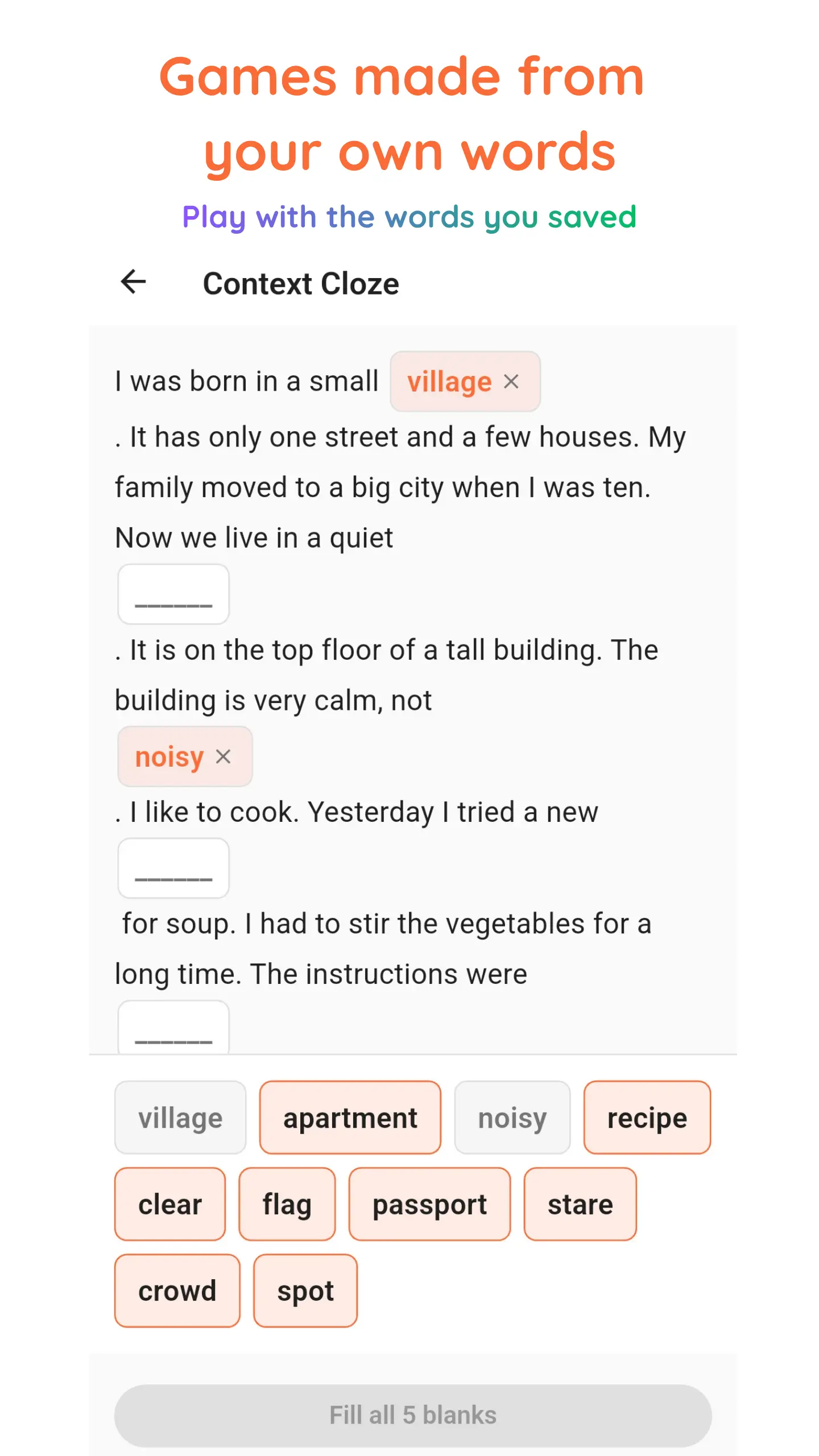
4 vocabulary review games (Word Match, Speed Swipe, Fill in the Blank, Four Choice) are designed to make learners retrieve vocabulary from memory. Quizzes include detailed explanations — for each wrong answer, the app explains why it is wrong, why the correct answer is right, and shows the original sentence from the reading.

📖 References

  • Roediger, H. L., & Karpicke, J. D. (2006). Test-enhanced learning: Taking memory tests improves long-term retention. Psychological Science, 17(3), 249-255.
  • Karpicke, J. D., & Blunt, J. R. (2011). Retrieval practice produces more learning than elaborative studying with concept mapping. Science, 331(6018), 772-775.
Reading-while-Listening
Clinton-Lisell

📚 Scientific basis

Clinton-Lisell's (2023) meta-analysis reported a small overall effect (g ≈ 0.18) on comprehension when comparing reading-while-listening with reading-only. A clearer effect (g ≈ 0.41) appeared in studies where reading speed was controlled by the experimental design. Note: g is a standardized effect size and should not be interpreted directly as a percentage improvement.

⚡ How ReadSmart applies it

Every reading includes audio precisely synchronized sentence by sentence (millisecond timestamps). The sentence currently playing is automatically highlighted — helping learners follow both the text and the audio at the same time. Learners can also adjust playback speed.

📖 References

  • Clinton-Lisell, V. (2023). Does reading while listening to text improve comprehension compared to reading only? A systematic review and meta-analysis. Educational Research: Theory & Practice, 34(3).

Personalization

Adaptive Learning
VanLehn

📚 Scientific basis

Adaptive learning is a promising approach in digital education, especially when systems use learning data to adjust content, pacing, and feedback. Research on intelligent tutoring systems (ITS) shows potential for improving learning outcomes across many contexts. Note: ITS research does not directly prove the effectiveness of every adaptive learning system; it is used here as a reference foundation for personalized design.

⚡ How ReadSmart applies it

Vocabulary review schedules adjust to each learner's memory rhythm — words a learner struggles with appear more often, while words they already know are spaced farther apart. Each user has a distinct review path.

📖 References

  • VanLehn, K. (2011). The relative effectiveness of human tutoring, intelligent tutoring systems, and other tutoring systems. Educational Psychologist, 46(4), 197-221.
  • Liu, M., et al. (2017). Investigating the effect of an adaptive learning intervention on students' learning. Educational Technology Research and Development, 65(6), 1605-1625.
Self-Paced Learning
Tullis & Benjamin

📚 Scientific basis

Self-paced learning allows learners to actively control their study speed and duration. Research by Tullis & Benjamin (2011) suggests that learners can achieve better memory outcomes when they are allowed to allocate their own study time (compared with the same total study time without flexible allocation), especially when they use appropriate learning strategies.

⚡ How ReadSmart applies it

Learners choose their own program (General, IELTS, TOEIC, Grammar, News), choose their own level (A1–C2), and decide whether to follow a structured path or learn by topic. There are no forced deadlines.

📖 References

  • Tullis, J. G., & Benjamin, A. S. (2011). On the effectiveness of self-paced learning. Journal of Memory and Language, 64(2), 109-118.
  • Knowles, M. S., et al. (2015). The Adult Learner (8th ed.). Routledge.
ReadSmart app screenshot 1
ReadSmart app screenshot 2
ReadSmart app screenshot 3
ReadSmart app screenshot 4
ReadSmart app screenshot 5
ReadSmart app screenshot 6
ReadSmart app screenshot 7
ReadSmart app screenshot 8

Start for free. Upgrade when you need more.

The Free plan is enough to use the dictionary and read daily news. Premium unlocks the program you choose.

Free

Use the dictionary every day, read & listen to the news

0 USD Free forever
  • Full dictionary — unlimited lookups
  • Unlimited word saving to your library
  • Flashcards and 4 vocabulary review games
  • Automatic spaced repetition
  • 10 free lessons
  • Read A2–C2 news every day
  • Offline support for saved data
  • No account required
Download the app for free

Premium

For serious learners

~2.35 USD /month
  • Unlock your selected level
  • A1–C2 Grammar
  • Premium audio
  • Quizzes with explanations
  • Personalized flashcards
  • All features in the Free plan
  • 7-day free trial
Start your 7-day trial

Frequently asked questions

Do I need to create an account to use ReadSmart?
No. You can download the app and start using it right away without creating an account.
How is ReadSmart different from dictionary apps like Cambridge or Oxford?
Traditional dictionaries are excellent for looking up meanings when you need to understand something immediately. ReadSmart adds translation (with the option to turn it off) and a post-lookup learning flow: save words to your library, keep the original sentence, review with flashcards/quizzes/games, and automatically highlight saved words when you meet them again in another reading.
How is ReadSmart different from Anki or Quizlet?
Anki and Quizlet are strong flashcard tools, but they usually require you to create your own decks or choose pre-made ones. ReadSmart saves words directly from readings or the dictionary, keeps the original sentence, and automatically adjusts the review schedule based on how well you remember each word.
What level is the app suitable for?
From A1 (beginner) to C2 (near-native), including IELTS Band 5.0–9.0 and TOEIC 450–945 points. Bilingual A1–A2 readings are available for beginners.
I'm preparing for IELTS / TOEIC. Does the app support that?
Yes. There are dedicated programs for IELTS Academic (Band 5.0–9.0) and TOEIC (450–945 points), with difficulty comparable to real exams.
Does it support offline use?
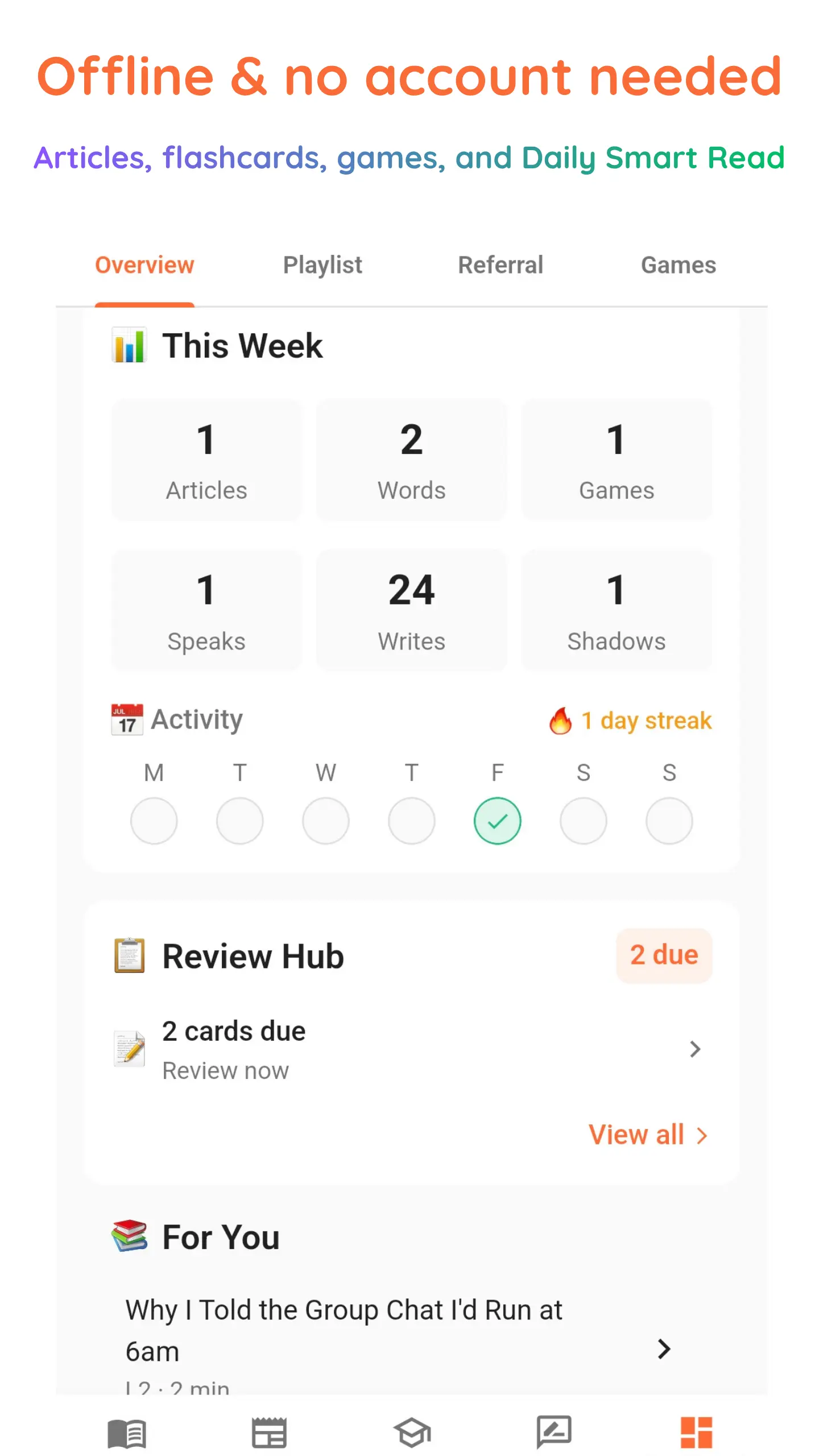
Yes. All vocabulary saved to your library and all downloaded readings can be accessed offline, including audio.
Can I cancel before I'm charged?
You can cancel your Premium plan anytime during the 7-day trial, and you won't be charged.
Is my personal data safe?
You don't need to provide sensitive personal information to start learning. Some learning data may be stored on your phone to support offline use; payment-related data is handled according to Google's and Apple's policies.

Learn with a seamless, science-backed flow

Read → Look Up → Save → Review. Start now.

Offline support Backed by learning science 7-day Premium trial

Or scan the QR code to download:

QR code to download ReadSmart app